Karat measures purity. Color comes from something else entirely, the alloy mixed in. Here's how the two actually relate.
Understanding Gold Purity - What Does Karat Mean in gold?
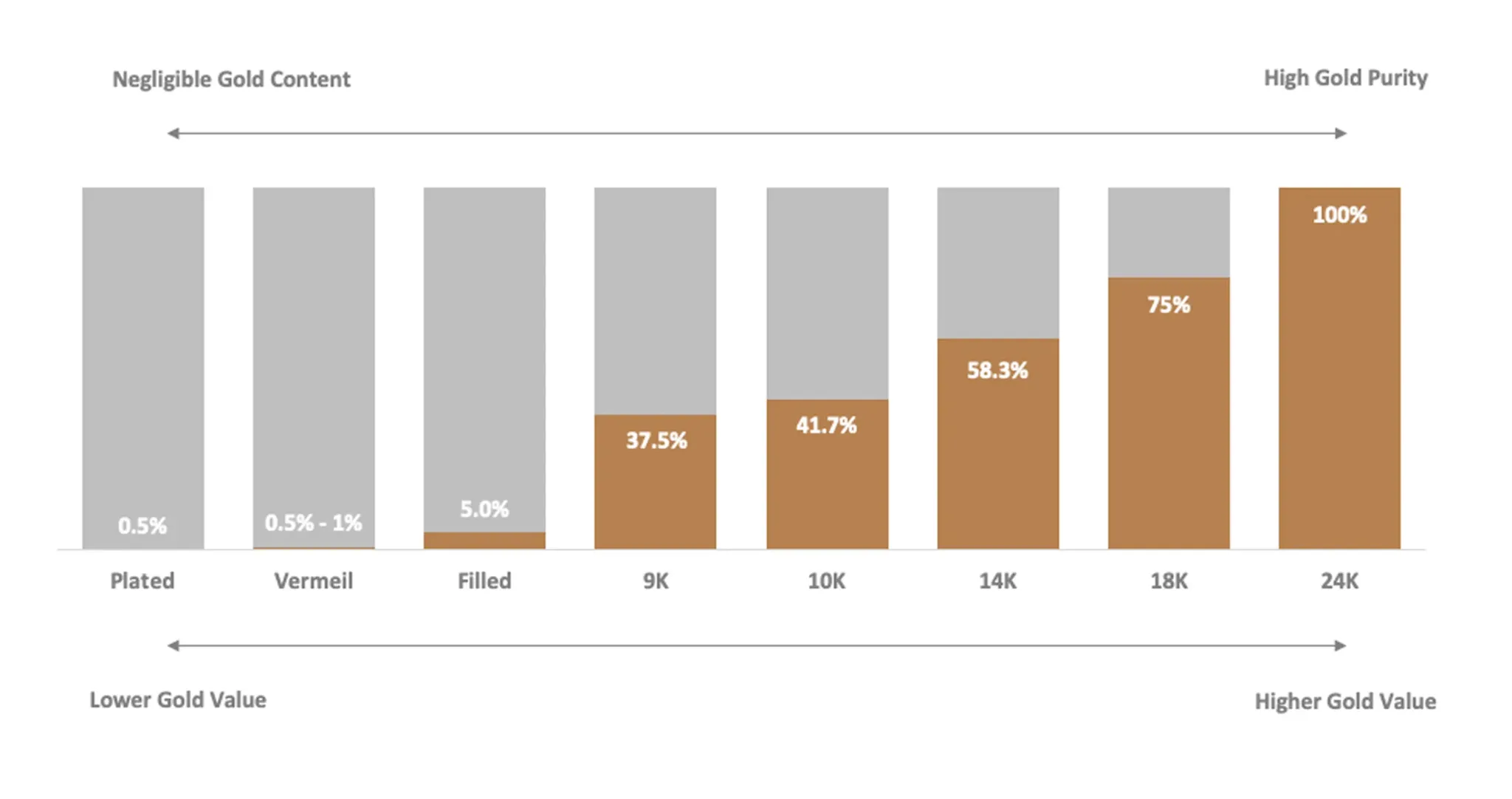
Karat (K) is the ratio of pure gold to other metals in an alloy. 24K is 99.5%+ pure gold; 18K is 75% gold with 25% alloy; 14K is 58.3% gold; 10K is 41.7% gold. For the full breakdown and how to verify it on a piece you're buying, see how to check gold purity.
What Actually Determines Color
This is the part karat alone doesn't explain. Gold's natural color is yellow, and purer gold (higher karat) shows a richer, deeper yellow simply because there's less alloy diluting it. But white gold and rose gold aren't lower purity, they're the same karat with a different alloy mixed in. White gold typically uses palladium or nickel, sometimes finished with rhodium plating for extra shine. Rose gold uses a higher proportion of copper. Two 18K rings can be the same purity and look completely different depending on which alloy went in.
How Karat Affects Practicality, Not Just Looks
- 24K: deepest color, softest metal. Too soft for most jewelry; common in coins and bars instead.
- 18K: rich color with meaningfully more durability than 24K, the most common choice for fine jewelry that balances both. AURÉV's 18K gold is made without nickel or brass.
- 14K: paler than 18K, more durable, and a more accessible price point, since less gold content means lower material cost.
- 10K: the palest and most durable of the four, but with enough base metal content that skin sensitivity becomes more likely for some wearers.
Choosing Based on What You Want
If color depth and richness matter most, go higher karat. If durability and cost matter most, go lower karat, understanding you're trading some color and gold content for it. If you're deciding between white, yellow, or rose specifically at the same karat, that's an alloy choice, not a purity one, so it doesn't affect durability or value the same way karat does.
For how solid gold compares to plated, filled, and vermeil options, see gold plated vs gold filled vs vermeil vs solid gold. For what actually drives gold's market value, see gold & silver value guide.
Where AURÉV Fits
AURÉV works in solid 18K gold, made without nickel or brass, hallmarked on every piece. Shop rings and chains or start a bespoke commission.